


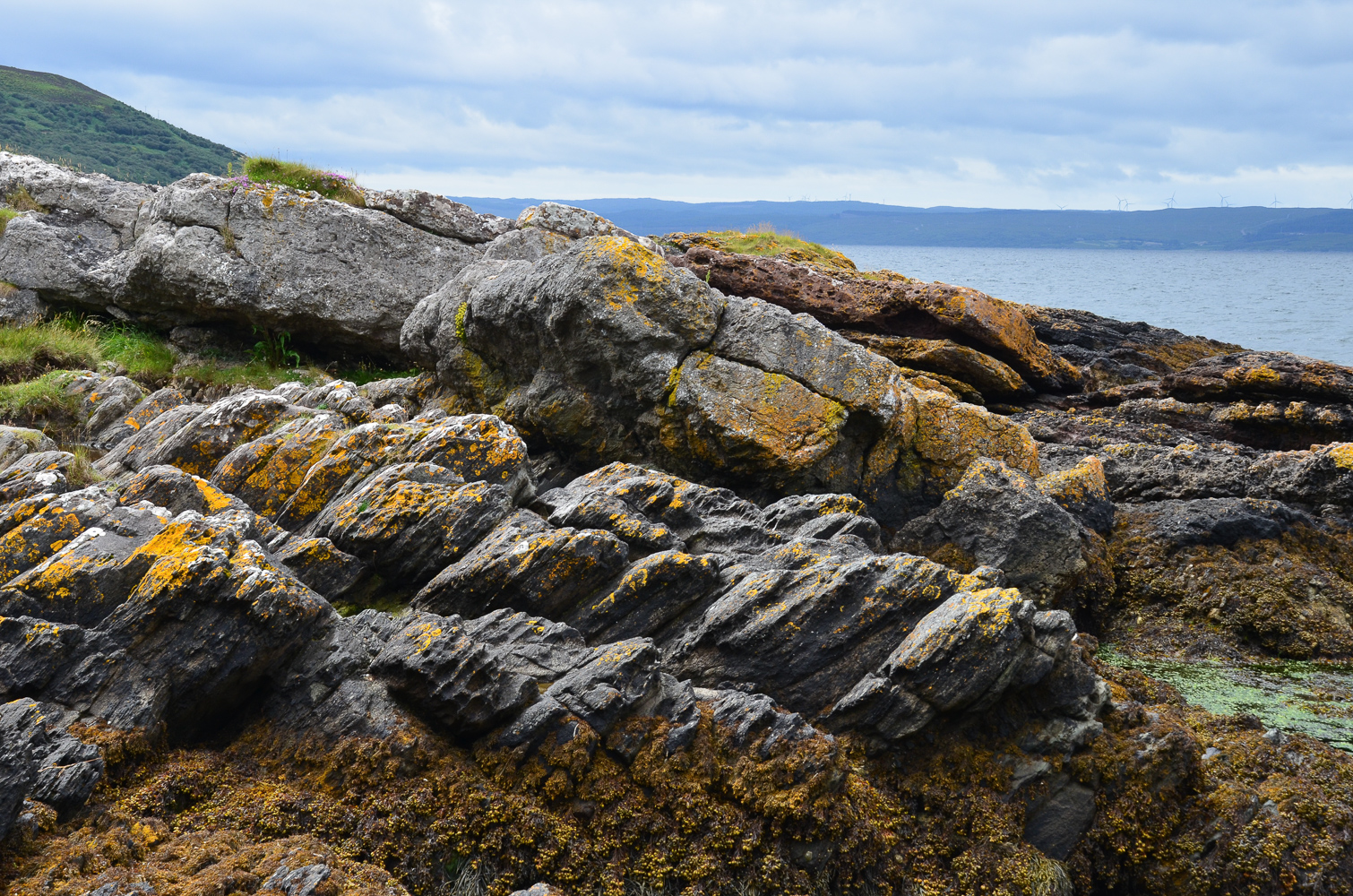
If North Glen Sannox proved how mountains were born, Newton Point — just north of Lochranza — revealed something even more profound: the sheer, dizzying scale of Earth’s history. This is one of the most important locations in the entire history of science, the place where James Hutton first glimpsed the abyss of time.
What is an “Unconformity”?
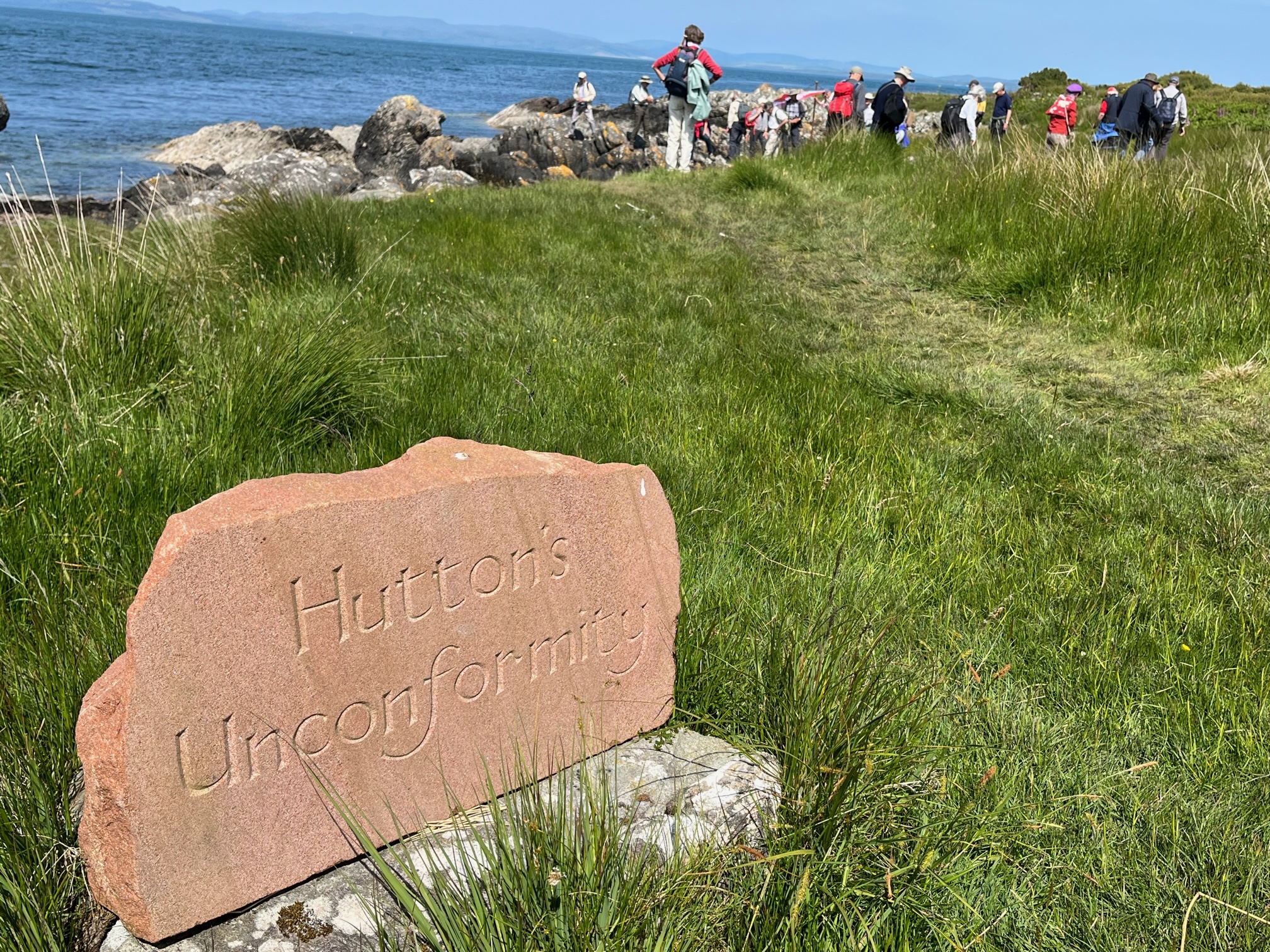
Imagine a history book where several chapters have been ripped out. In geology, an unconformity is a physical gap in the rock record — it occurs when older rocks are tilted or folded by massive tectonic forces, eroded away by the elements over millions of years, and then buried beneath much younger layers of sediment.
At Newton Point, you are looking at two worlds colliding across 190 million years:
- The Bottom Layer — Dalradian Schist (~540 million years old). These layers are standing nearly vertical, having been squeezed and twisted by ancient mountain-building events that no longer exist.
- The Top Layer — Carboniferous Sandstone (~350 million years old). These layers sit almost horizontally on top of the jagged, eroded edges of the schist.
The moment where the two meet — where nearly-vertical rock is truncated by nearly-horizontal rock — is the unconformity.
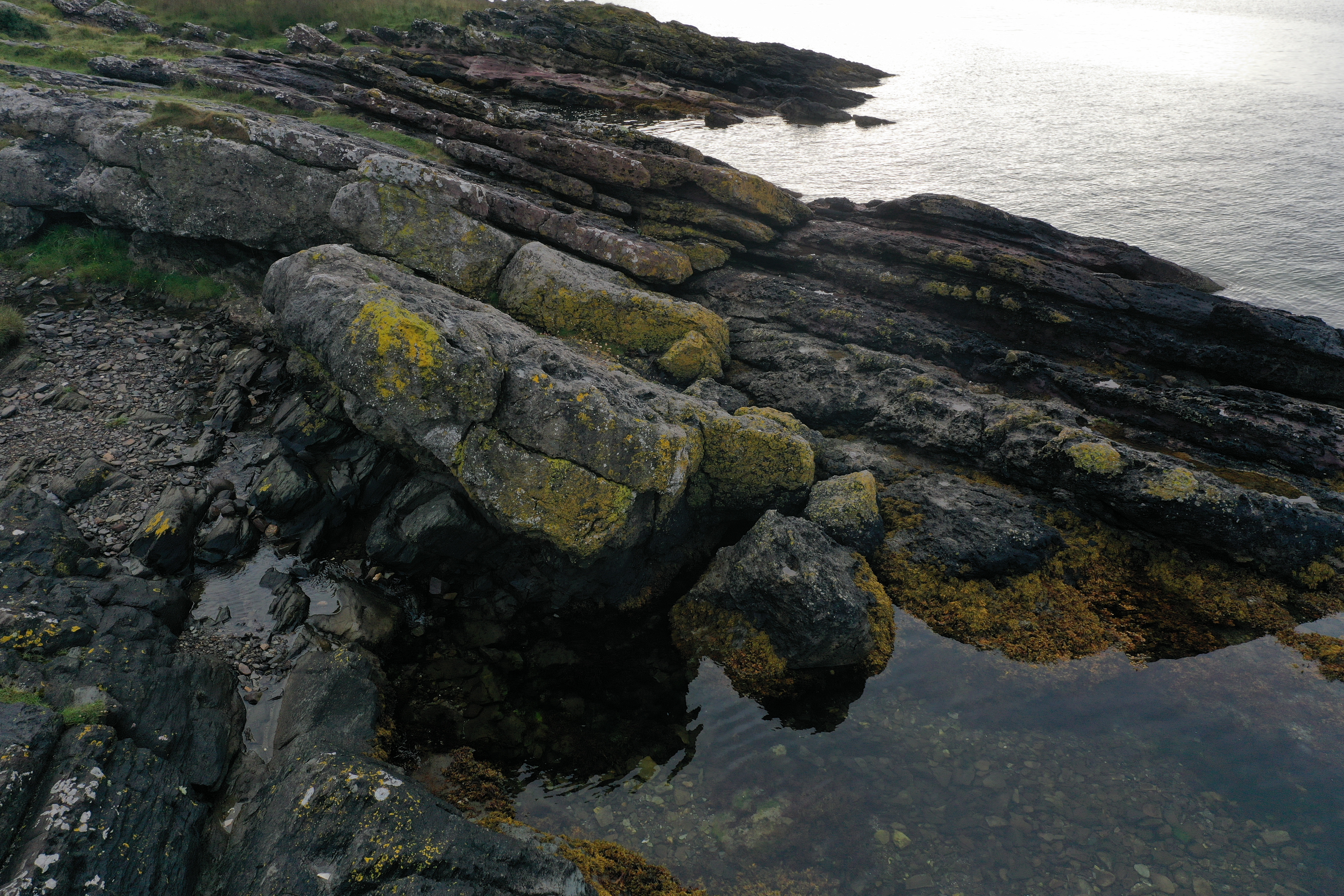
Newton Point from the air — the boundary between the two rock types is clearly visible. Credit: Jessica Pugsley, University of Aberdeen.
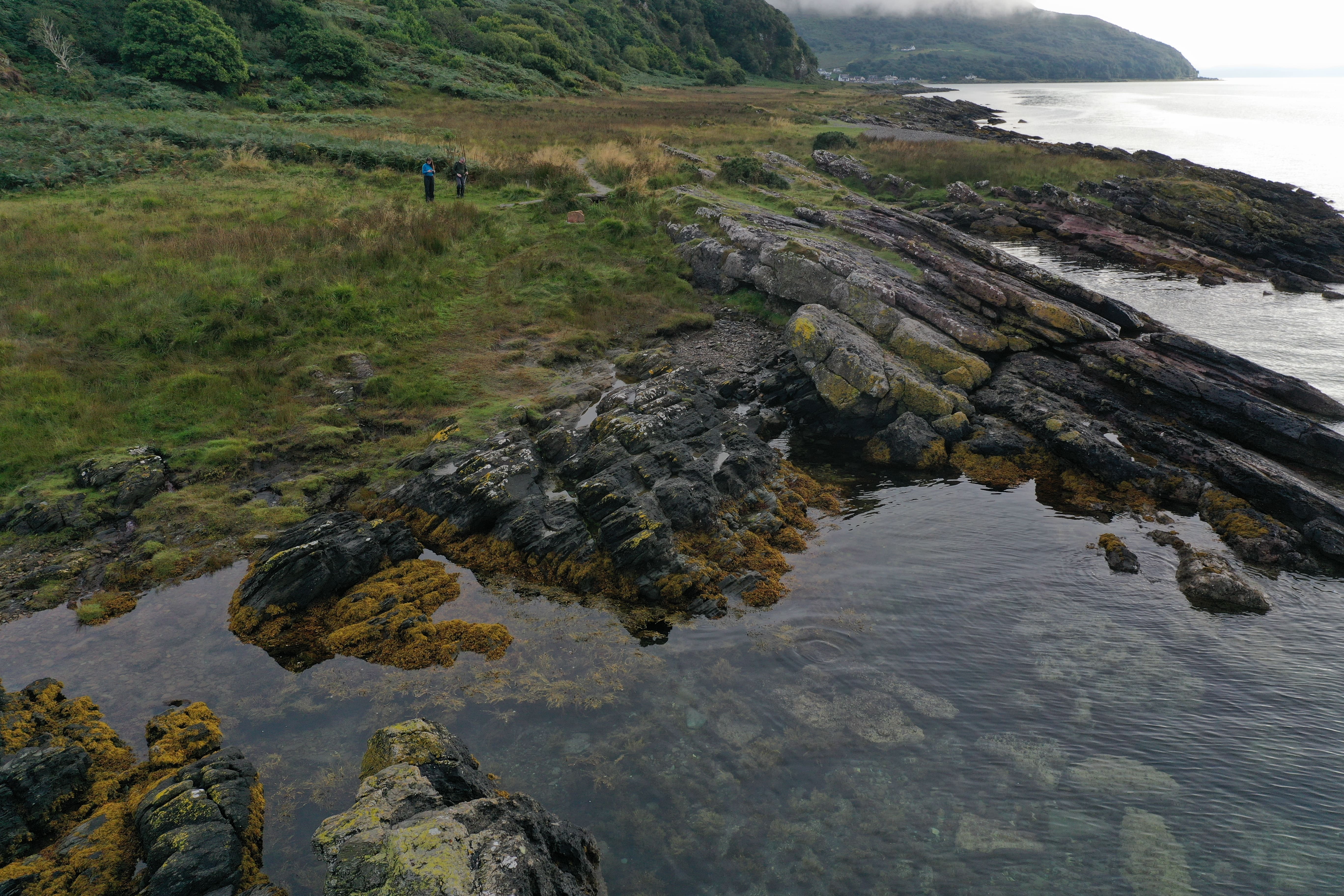
Tilted schist layers meet horizontal sandstone above — the unconformity contact runs between them. Credit: Jessica Pugsley, University of Aberdeen.
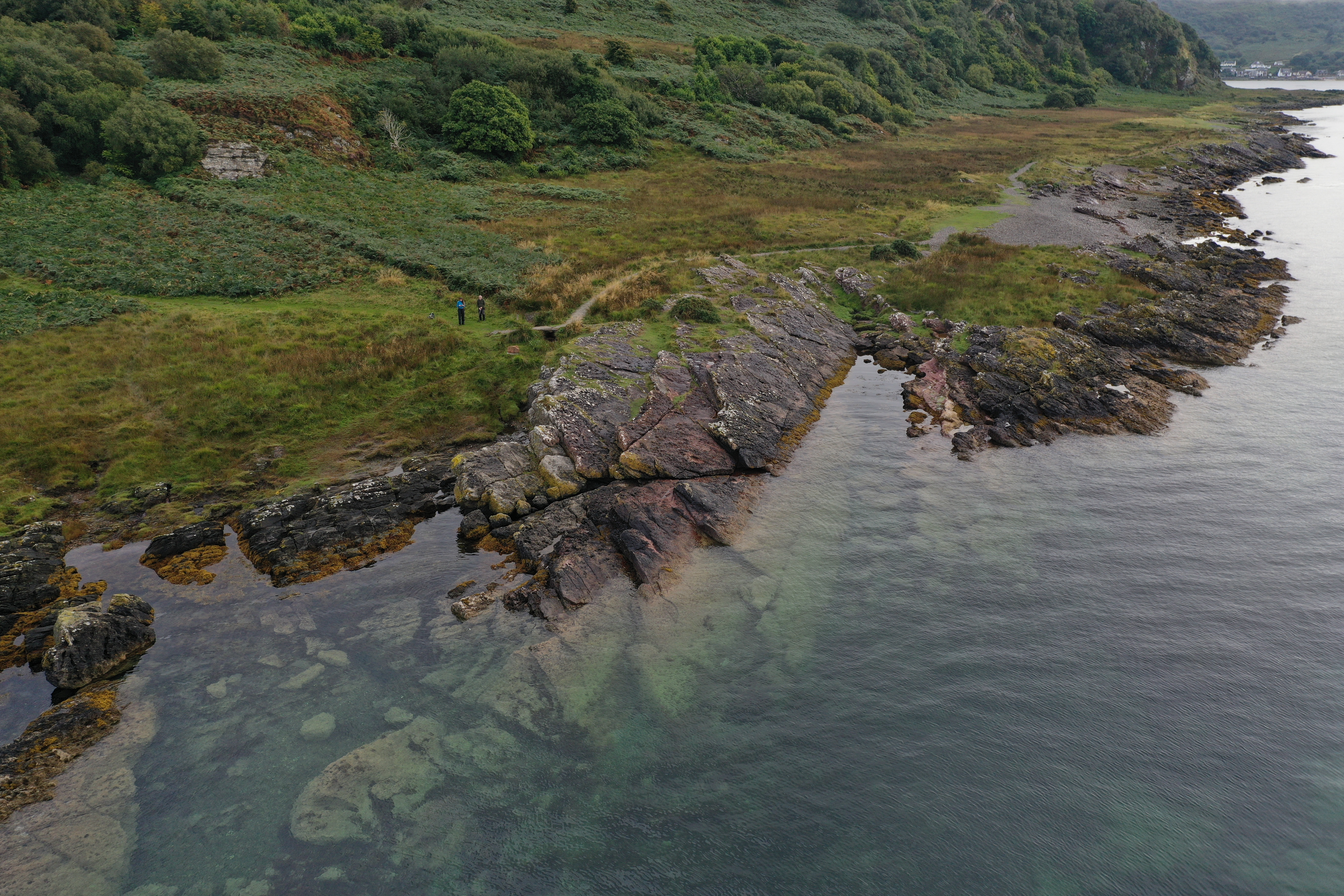
The full extent of the unconformity exposed at the shoreline at low tide. Credit: Jessica Pugsley, University of Aberdeen.
190 Million Years of Missing Time
years of missing time
190 Ma
The gap at Hutton’s Unconformity, Lochranza. This is where Hutton first made the discovery — Arran is where the science of geology began.
~65 Ma
Often called the “Holy Grail” of geology — but Arran’s gap is three times larger, and Hutton came to Arran first.
How an Unconformity Forms
This six-stage diagram shows the process that created what you see at Newton Point — from seafloor sediment 540 million years ago to the exposed unconformity of today: seafloor deposition → mountain-building → erosion → new deposition → re-tilting → exposure at the surface.
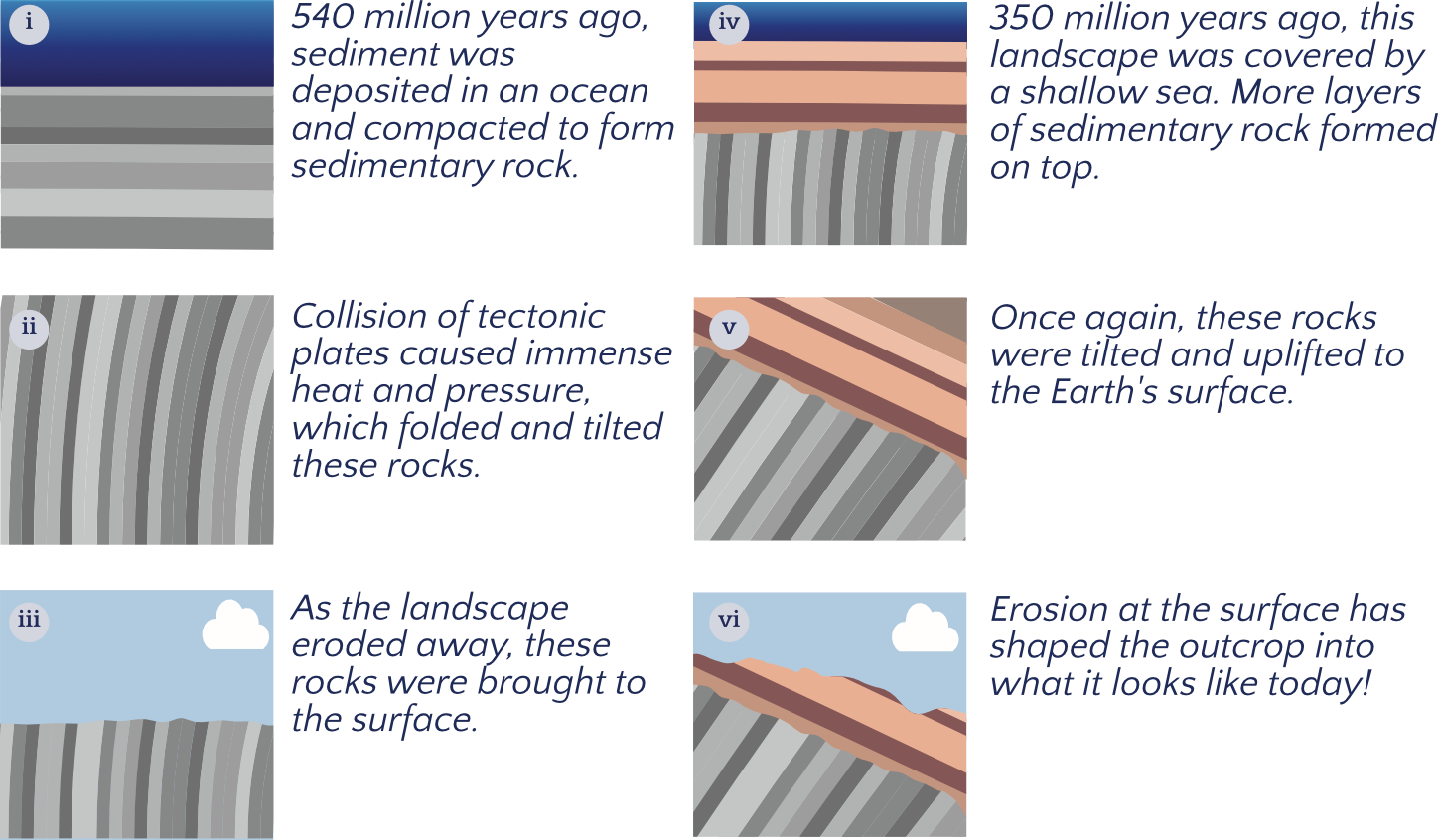
Formation of Hutton’s Unconformity — a 540-million-year journey from ancient seafloor to the rock surface you stand on today.
James Hutton and the Birth of Deep Time
By standing at Newton Point in 1787, James Hutton realised that for such a cycle to have occurred — mountains raised and completely worn flat, new sediment deposited on top, then tilted again — the Earth couldn’t be just a few thousand years old, as was commonly believed. It had to be inconceivably, almost infinitely old.
This was the birth of “Deep Time” — the understanding that geological processes operate over timescales so vast that the human mind cannot truly comprehend them. It was one of the most profound shifts in scientific thinking in history, as revolutionary in its own way as the discoveries of Copernicus or Darwin.
“The result, therefore, of our present enquiry is, that we find no vestige of a beginning, — no prospect of an end.”
— James Hutton, Theory of the Earth, 1788
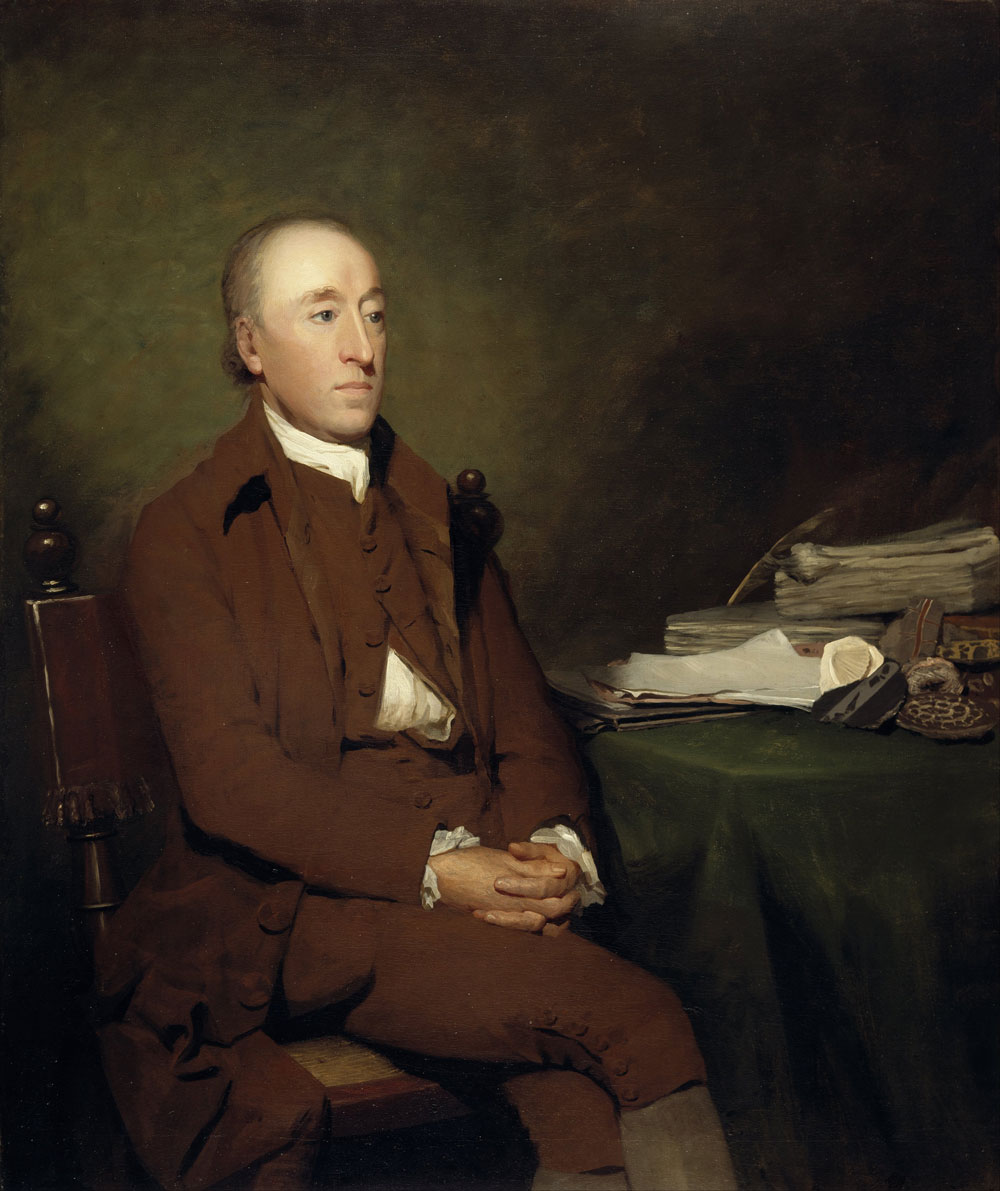
James Hutton (1726–1797), painted by Sir Henry Raeburn c. 1776.
The Poet and the Geologist
There is a fascinating theory that the radical new science of the Scottish Enlightenment found its way into the most famous love poem in history. Robert Burns and James Hutton were contemporaries in Edinburgh’s small, tight-knit intellectual circles. In 1794, just a few years after Hutton’s discoveries on Arran, Burns wrote A Red, Red Rose.
Till a’ the seas gang dry, my dear,
And the rocks melt wi’ the sun;
I will love thee still, my dear,
While the sands o’ life shall run.
— Robert Burns, A Red, Red Rose, 1794
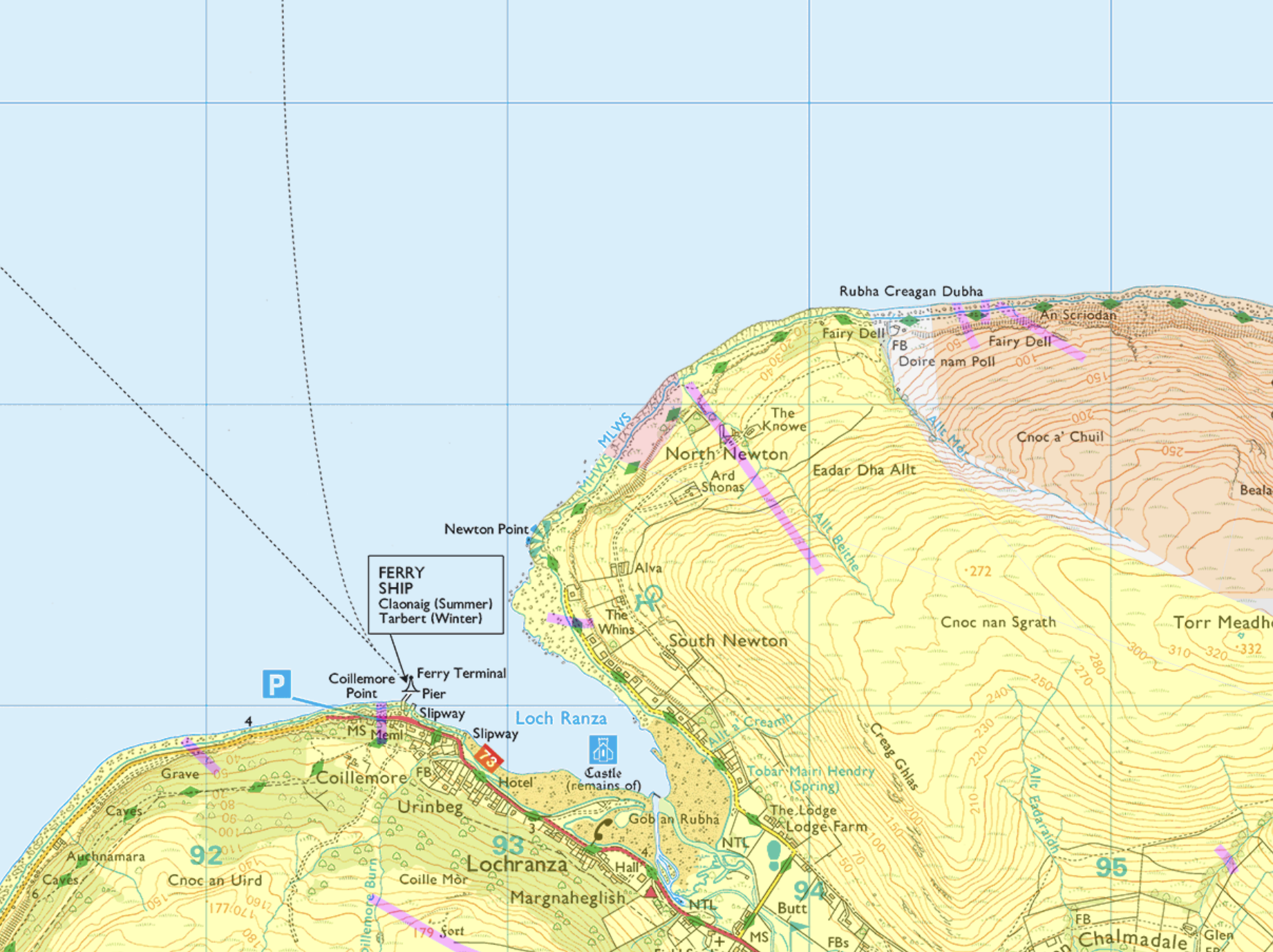
Location at Newton Point
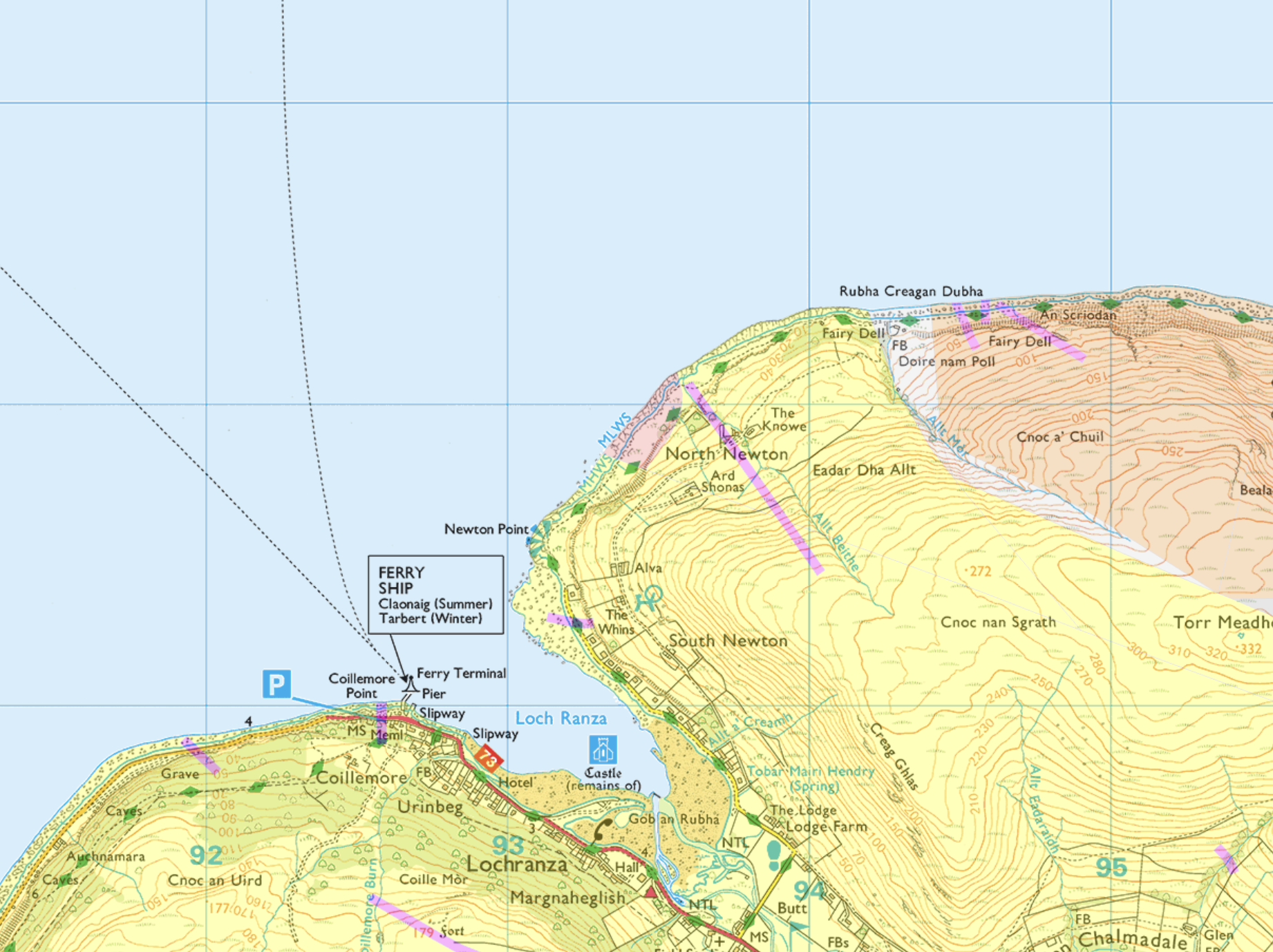
Newton Point lies north of Lochranza Castle, accessible on foot along the shoreline. Visit at low tide for the best exposure of the unconformity contact.
Why Newton Point Matters — Locally and Globally
Newton Point is a pilgrimage site for scientists worldwide. While Siccar Point in Berwickshire is often called the “Holy Grail” of geology, Arran is where it all started. This was the first unconformity James Hutton ever identified — the site that launched a revolution in human understanding of the Earth.
Because of this site, the Isle of Arran can lay claim to being the birthplace of geological science — the place where the fundamental rules of how our planet works were first read in rock. This is recognised internationally through the island’s UNESCO Global Geopark status.
The discovery made here rippled outward in ways that transformed every science that followed. Charles Lyell built upon Hutton’s Deep Time when writing his Principles of Geology. Charles Darwin read Lyell on the voyage of the Beagle and used Deep Time as the canvas on which evolution could paint — without Hutton’s unconformity, there may have been no Origin of Species.
Explore Further
Plan Your Visit
Walk north from Lochranza village past Lochranza Castle along the shoreline. The unconformity is at Newton Point — approximately 20 minutes from the village centre. Visit at low tide for the best exposure of the contact.
Near-vertical dark schist layers truncated sharply by near-horizontal pale sandstone above. The interpretation marker at the point identifies the exact contact. The vertical orientation of the schist — ancient mountains tilted on their side — is strikingly visible.
Combine with the Granite Contact at North Glen Sannox (25 minutes by car) for the full story of James Hutton’s discoveries on Arran — together, these two sites tell the complete Huttonian revolution.
Newton Point is a Site of Special Scientific Interest (SSSI) and a Scheduled Monument within the Isle of Arran UNESCO Global Geopark. Please do not remove any rock samples from the site.