


North Glen Sannox on the Isle of Arran is more than just a beautiful hike; it is a world-class geological “crime scene” where James Hutton, the father of modern geology, found the evidence he needed to change how we understand the Earth.
What is a Geological Contact?
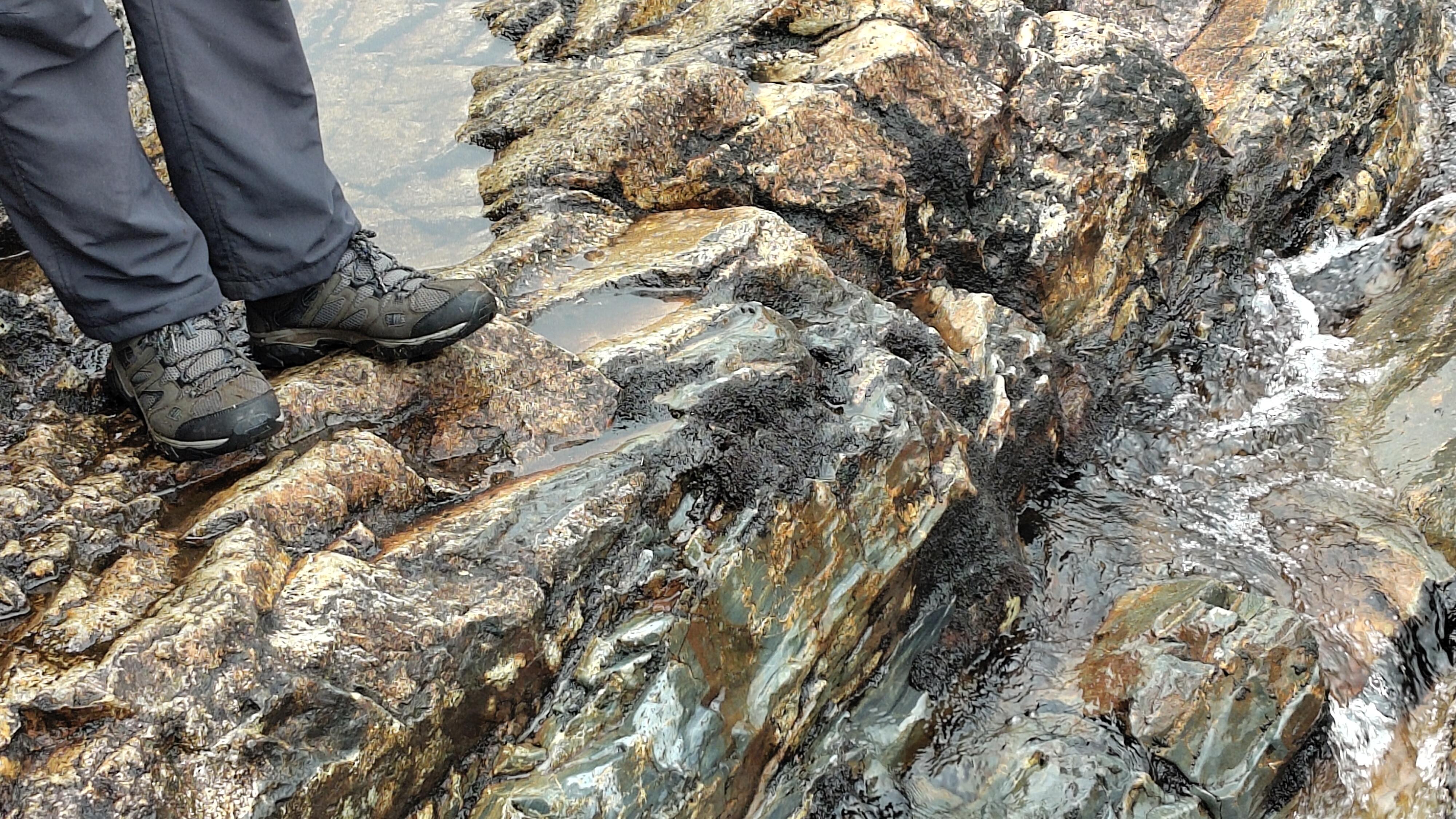
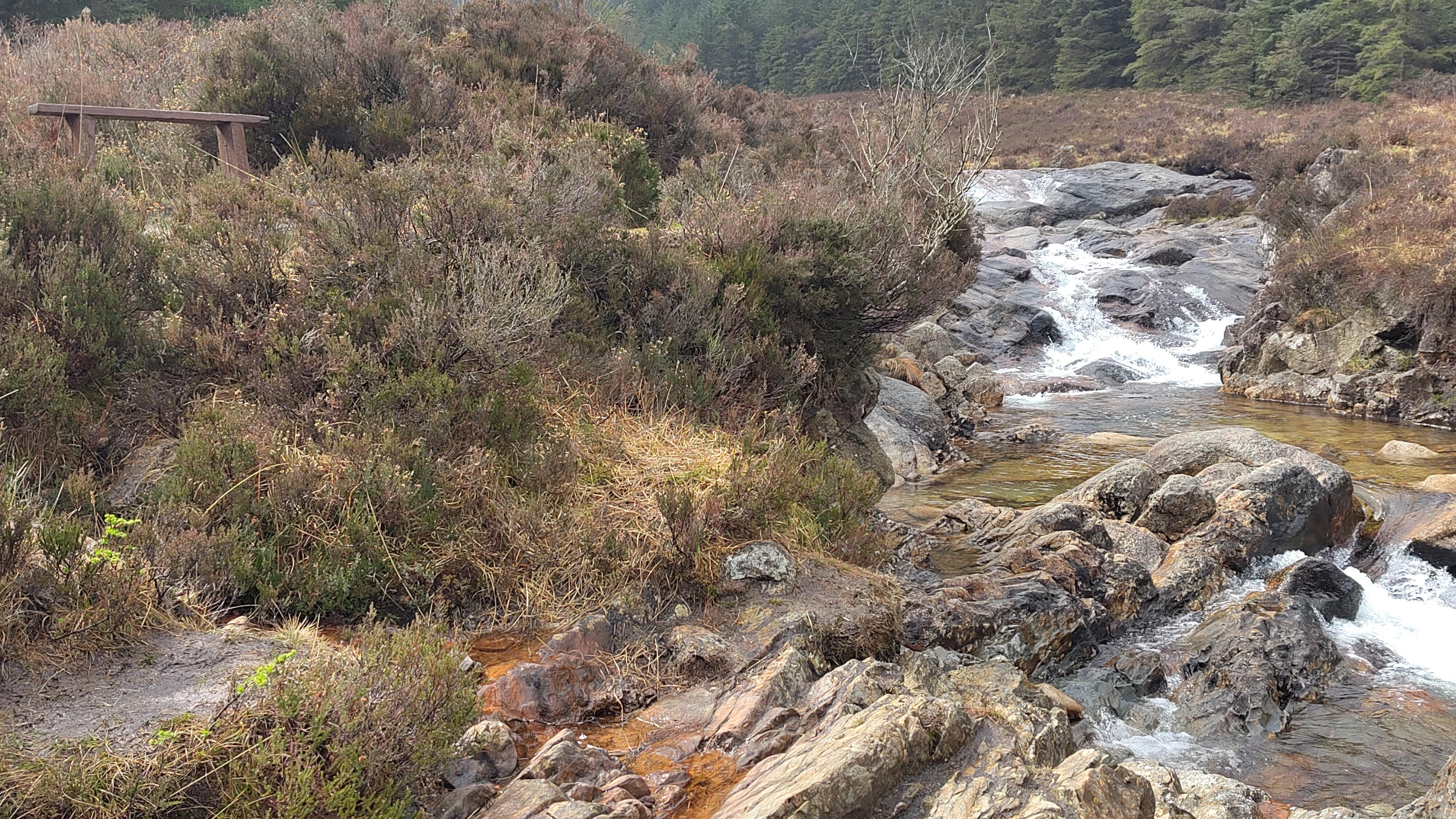
In geology, a contact is the surface where two different types of rock meet. By looking closely at how these rocks touch, we can figure out which rock arrived first and how the second one was formed. At North Glen Sannox, the contact is between Dalradian Schist (the old “host” rock) and the Northern Granite (the young “intruder”).
The river has cut down through both rocks and exposed their meeting point right in the streambed — you can crouch down and touch it.
The burn at North Glen Sannox — granite and schist lie side by side in the streambed. Credit: Angus Miller.
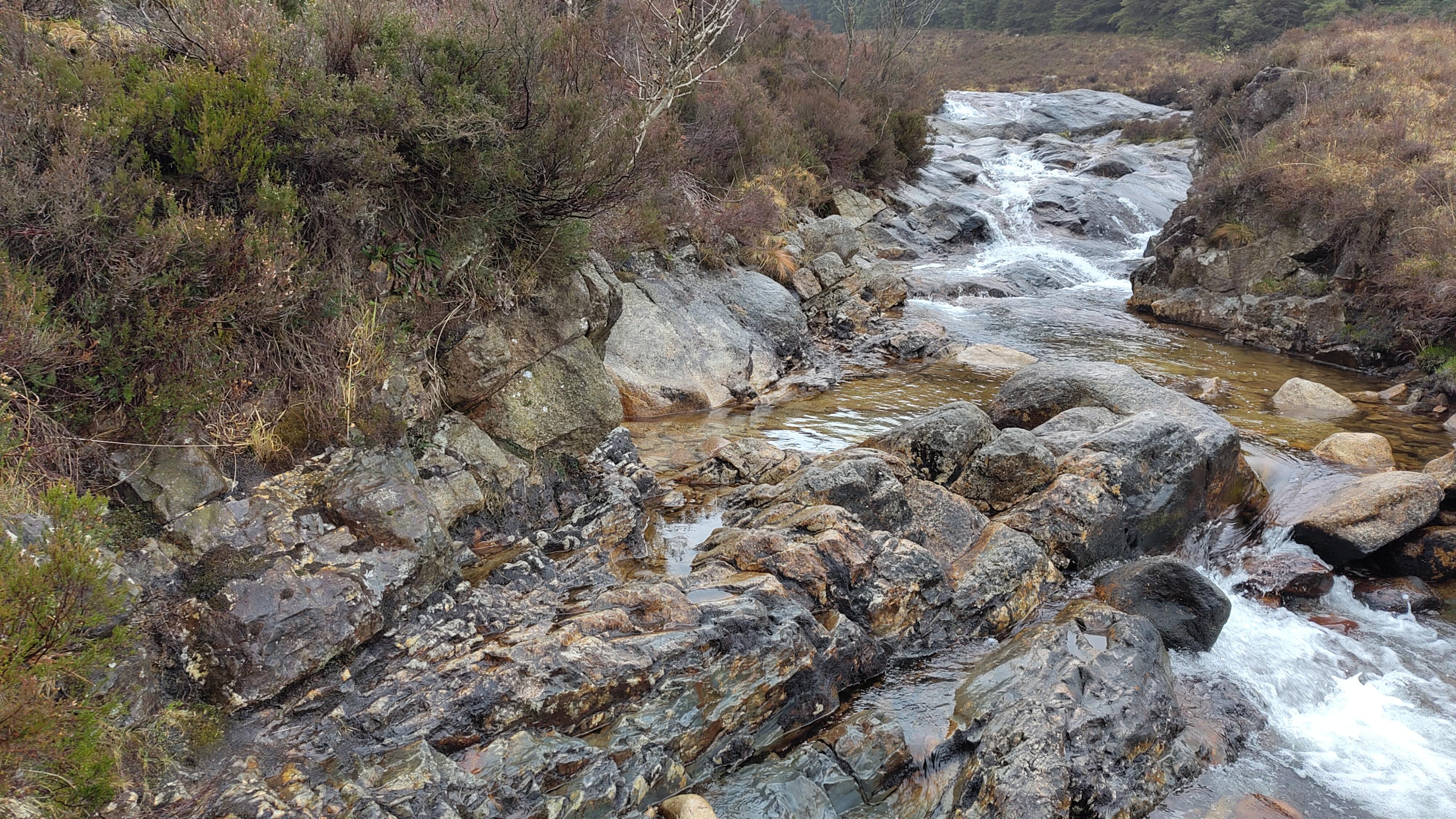
The glen reveals half a billion years of Earth history in a single viewpoint. Credit: Angus Miller.
The 500-Million-Year Gap
~540 Million Years Ago
The Dalradian Schist forms from ancient seafloor muds, crushed and heated during a great mountain-building event.
~60 Million Years Ago
The Northern Granite rises as molten magma — roughly when the dinosaurs were disappearing from the Earth.
Today
The burn exposes both rocks side by side in the streambed — half a billion years of history laid bare beneath your feet.
Seeing the Difference
You can identify the transition between the two rock types without even being a geologist. The river itself tells the story through the shape of the stones and the sound of the water.
| Feature | Granite (younger, ~60 Ma) | Schist (older, ~540 Ma) |
|---|---|---|
| Shape | Large, rounded boulders — like giant bubbles | Sharp, pointed, layered fragments |
| Texture | Rough and crystalline — like coarse sandpaper | Flat and foliated — thin “leaf-like” layers |
| The Water | Flows in deep, smooth gurgles over rounded surfaces | Splashes and “chatters” over jagged, vertical edges |
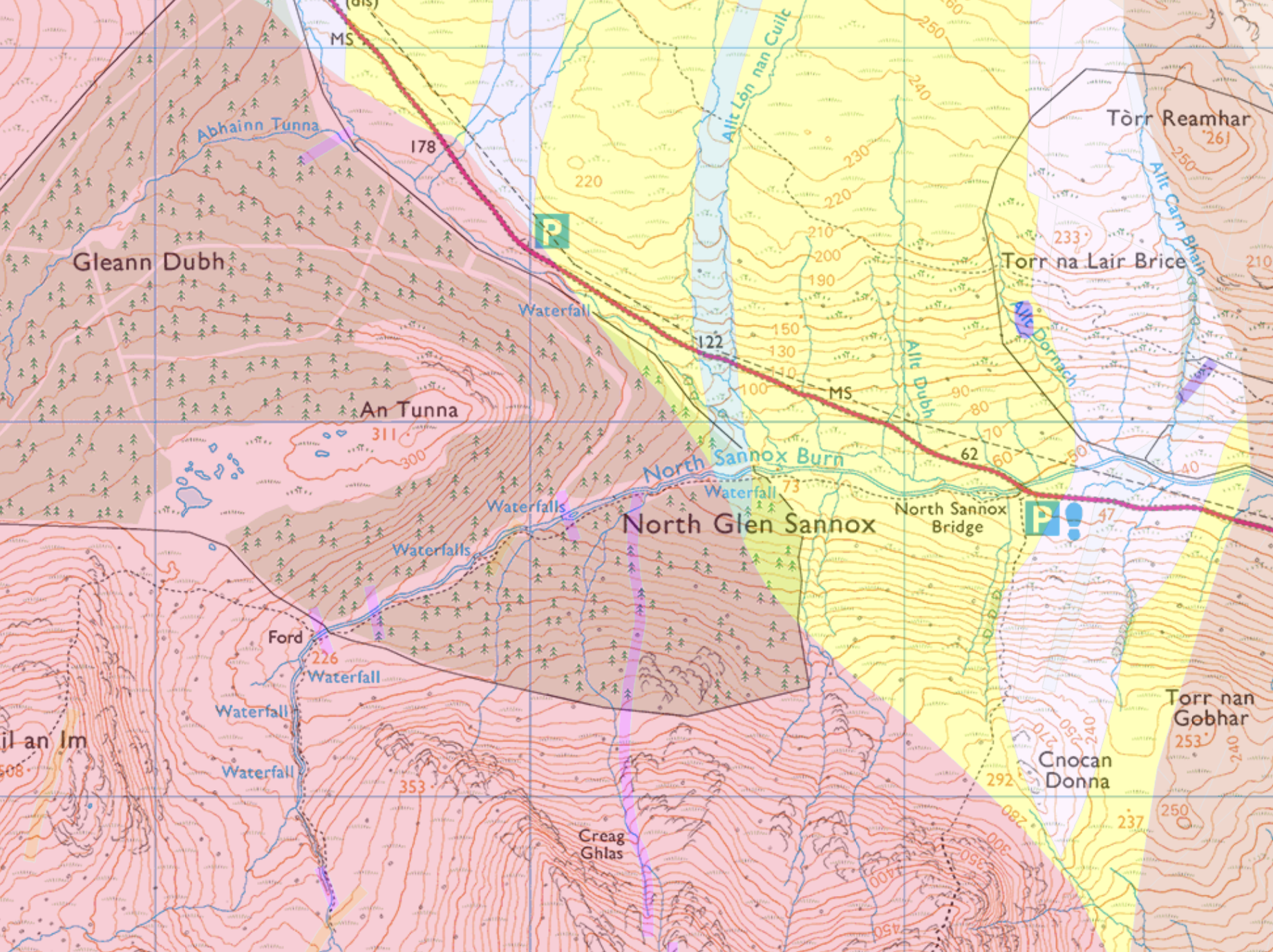
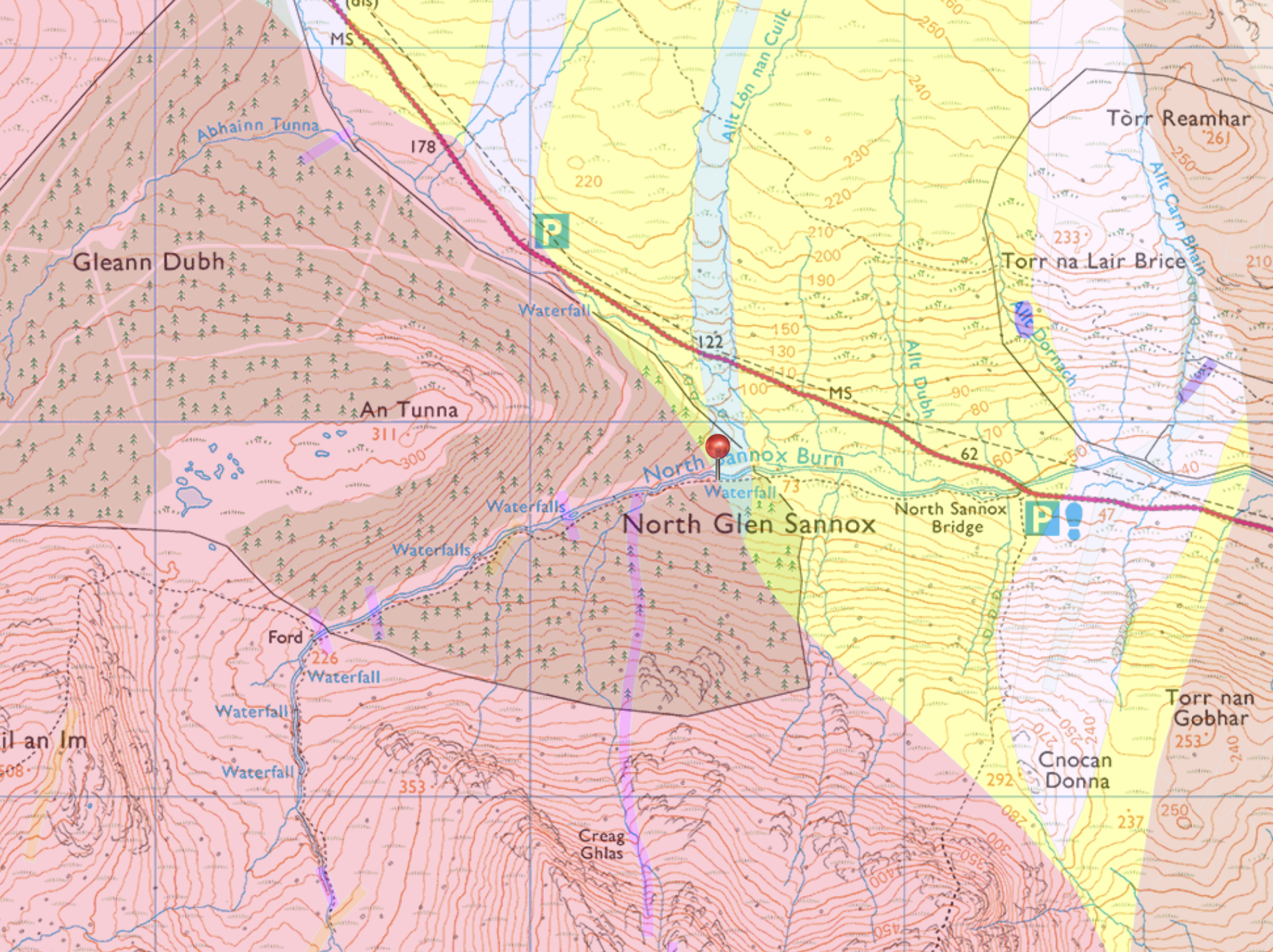
Geological Map
The map shows the dramatic boundary between the pink granite (north) and the brown Dalradian schist (south) — the contact you walk along in the glen.
James Hutton’s Eureka Moment
Before the late 1700s, many people believed all rocks had settled out of a giant primeval ocean. James Hutton disagreed: he believed the Earth’s core was hot, and that mountains were formed by molten magma forcing its way upward. In 1787, Hutton came to Arran specifically to find the “junction” where granite met the surrounding rock. At North Glen Sannox, he found exactly what he was looking for: veins of granite snaking into the cracks of the schist.
“In setting out upon that expedition [Arran] I had but one object in view: that was the nature of the granite, and the connection of it with the contiguous strata.”
— James Hutton, 1787
Upon seeing the contact at North Glen Sannox, he realised he had found the crucial evidence for his theory:
“Nothing can be more evident than that here the schistus had been broken and invaded by the granite; as in this place the regular stratification of the vertical schistus is broken obliquely by the other rock, and parts of the schistus involved or almost insulated in the mass of granite, which from this junction enters and traverses the body of the schistus in little veins terminating in capillaries.”
— James Hutton, Theory of the Earth
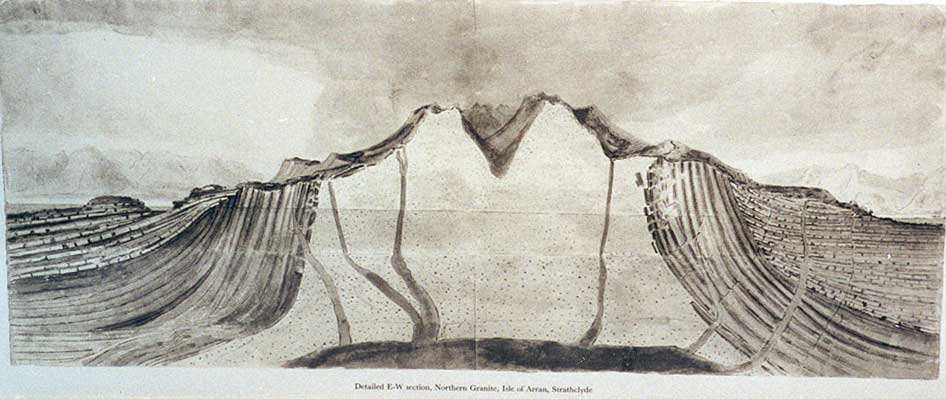
Cross-Section Diagram
Cross-section of the Arran mountains from Hutton’s Theory of the Earth (1795) — showing his understanding of how molten granite forced its way up through older rocks.
Experiencing the Glen
North Glen Sannox rewards those who get their feet wet. The geological contact lies right in the burn, and the best way to experience it is to wade in and look closely at the rocks beneath your feet.
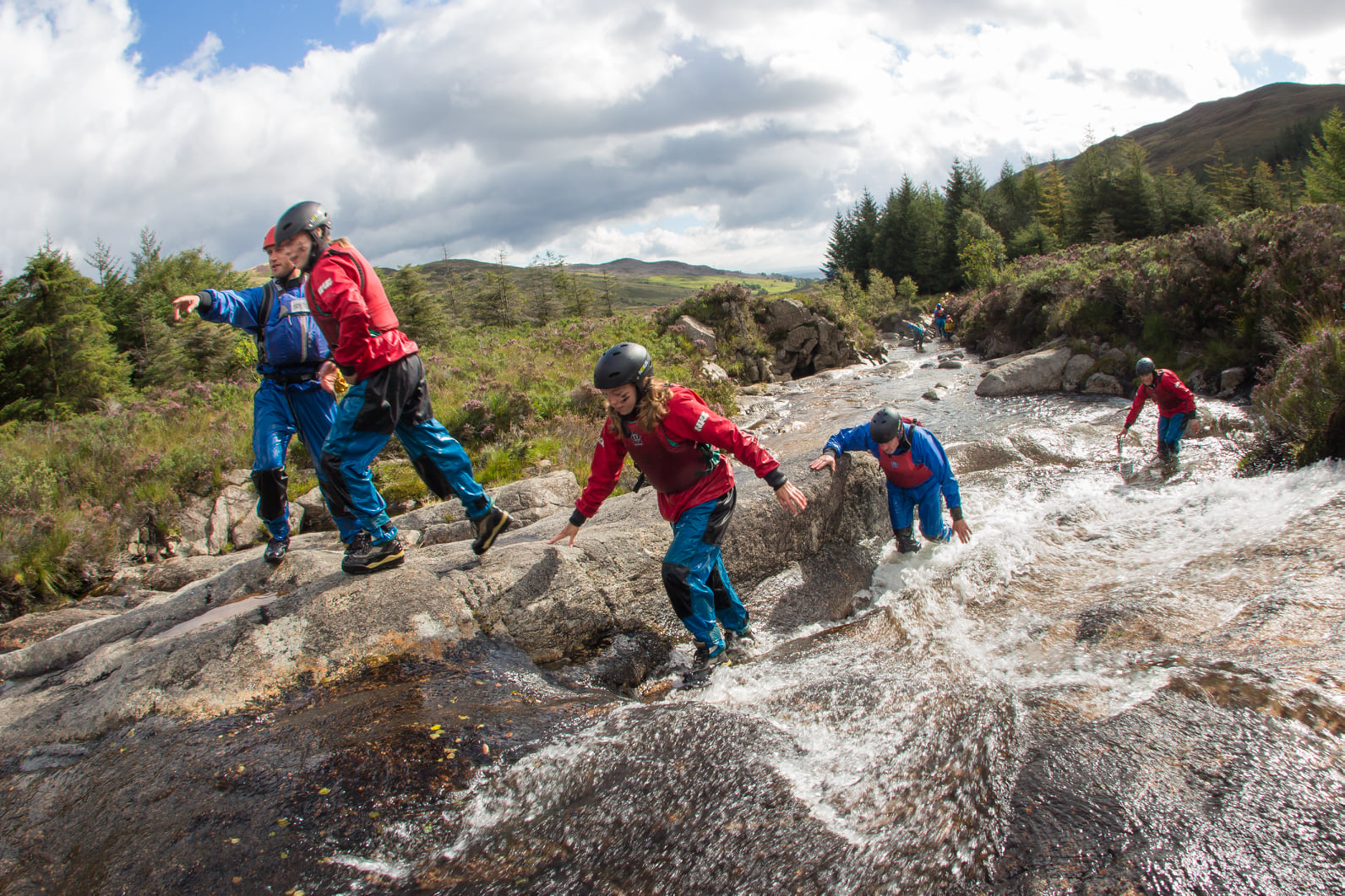
Gorge walking in North Glen Sannox. Credit: Lochranza Centre.
Guided gorge walking and geology walks are available through the Lochranza Centre — ideal for school groups and families wanting to explore the contact under expert guidance.
Explore Further
3D model by Jessica Pugsley, University of Aberdeen.
Plan Your Visit
Start from the car park at the head of North Glen Sannox, off the A841 north of Sannox village. Follow the burn upstream — the contact appears approximately 1 km into the walk. Good waterproof footwear is essential.
Watch for the transition from large, rounded granite boulders to sharp, layered schist. Look for white granite veins threading into the dark schist. Listen — the sound of the water changes noticeably at the contact.
Gorge walking and guided geology walks are available through the Lochranza Centre — ideal for school groups and families wanting to explore the contact under expert guidance.
North Glen Sannox is a Site of Special Scientific Interest (SSSI) within the Isle of Arran UNESCO Global Geopark. Please stay on paths and do not remove any rock samples.